
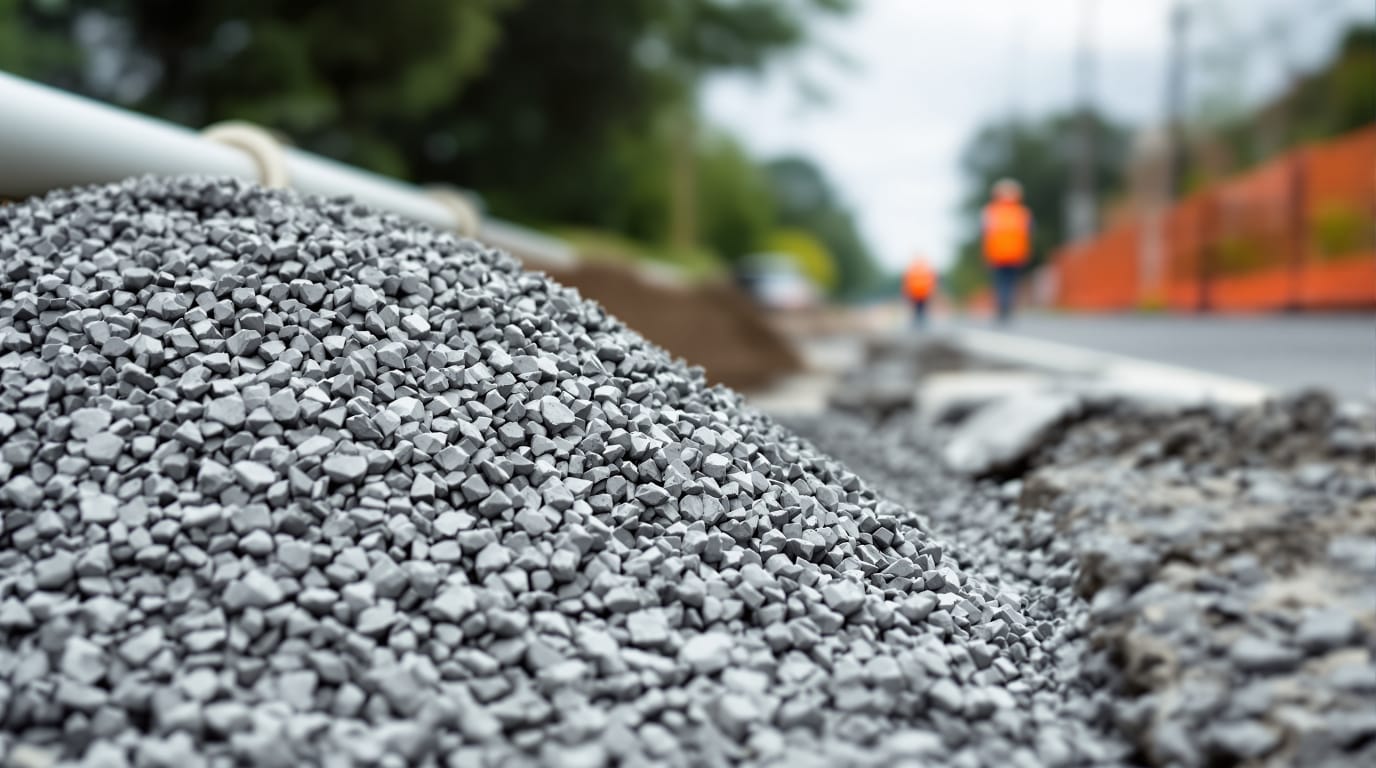
Utility contractors pay twice for rubble: once to haul it out and again to truck in bedding and backfill. With a crusher and a screening plant on site, that same pile can come back as usable material, as long as you understand what your spec says about size and fines.
Trench backfill from recycled concrete can cut hauling and material costs, but only when it meets the project’s requirements. Here’s what to know before you crush a single slab.
Why Utility Contractors Look at Recycling
Trenching generates broken concrete, old pavement and surplus material, and the same job needs clean, well-graded stone for bedding and backfill. Hauling spoil away and buying material in is a double hit on the budget, especially on jobs far from a quarry or recycling yard. Crushing on site turns part of that waste stream into a supply stream.
On-site recycling for utility contractors also cuts truck trips, which matters on busy streets and in neighborhoods where traffic and noise draw complaints.
Bedding vs. Backfill: Know the Difference
The two layers do different jobs, so the material requirements differ.
- Pipe bedding sits directly under and around the pipe. Its job is to support the pipe evenly and protect it from point loads. Bedding specs tend to be the strictest, because oversize, sharp or poorly graded material can damage the pipe.
- Trench backfill goes above the bedding zone and fills the trench to grade. It has more tolerance for size, but it still needs to compact well and avoid settling later.
Always check which zone your material is headed for before you decide how to process it.
Why Size and Fines Matter
Size controls how well the material surrounds and supports the pipe. Oversize pieces can create voids or press against the pipe, so there’s usually a maximum particle size, especially for bedding.
Fines are the small particles in the mix. A little helps material pack together, but too much can hold water, compact unpredictably or fail a gradation test. Too few can leave the material loose and hard to compact. Where the balance sits depends on the spec.
Trench backfill size and fines requirements vary by agency, utility, pipe material and soil conditions, so use the project documents as your guide. Don’t assume that what worked on the last job applies to this one.
Can You Use Recycled Aggregate for Pipe Bedding?
Often yes, but not always. Recycled aggregate for pipe bedding is accepted in some places and restricted in others, and acceptance can depend on the pipe type, groundwater conditions or the utility’s own standards. Before you invest in crushing, ask the project owner or utility whether crushed concrete is allowed for bedding, backfill or both, and get the answer in writing.
How to Make Pipe Bedding from Crushed Concrete
If recycled material is allowed, here’s the basic workflow for pipe bedding from crushed concrete.
- Clean the feed. Remove rebar, wood, asphalt, soil and trash. Contaminants are the fastest way to fail an inspection.
- Crush to a controlled size. Set the crusher for the top size your spec allows, and adjust in small steps.
- Screen out oversize and control fines. A screen lets you remove oversize pieces and manage the fines content, which a crusher alone can’t do.
- Test. Sample the stockpile and check it against the spec before it goes in the trench.
- Stockpile carefully. Material can segregate in a pile, with coarse pieces rolling to the edges. Sample from several spots and handle the pile gently.
- Place and compact in lifts. Follow the project’s compaction requirements for each layer.
What Can Go Wrong
- Wrong spec for the job. Using material that meets one agency’s requirements on another agency’s project can lead to rejection and rework.
- Variable feed. Mixed rubble produces inconsistent output. Sort and test regularly.
- Fines creep. Over-crushing or a worn crusher can produce more fines than the spec allows.
- Contamination. Even small amounts of unwanted material can cause a failed test.
- Not allowed at all. Some projects simply won’t accept recycled concrete in the trench, so confirm early.
Turn Trench Rubble into Material
If you’re planning on-site recycling for your utility work, talk to the team at R.R. Equipment about matching crushing and screening equipment to your material and your specs.