
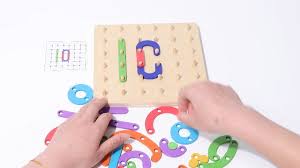
Parents searching for Arabic wooden puzzles are usually looking for more than a toy shelf addition. They want a learning tool that gives children a physical relationship with letters, shapes, and sequencing at an early stage. That matters because Arabic literacy starts with visual familiarity and repeated recognition long before fluent reading appears. When children can touch letters, move them, compare forms, and match them to positions, the alphabet stops being an abstract chart and becomes something they can actively explore.
Why tactile alphabet learning remains useful
Hands-on learning continues to matter in early childhood because young children do not absorb symbols in the same way older students do. NAEYC’s developmentally appropriate practice framework stresses that learning should connect with children’s stage of development and active engagement. In practical terms, that means early materials work best when children can manipulate objects, repeat actions, and build understanding through direct interaction rather than passive exposure alone.
This is especially important in Arabic. The World Bank’s report on Arabic language teaching in the Middle East and North Africa notes that many children in the region face learning poverty and that early exposure to language-rich environments is essential. The report also points out that children often enter school with limited experience in Modern Standard Arabic before formal literacy begins. That makes early familiarization with letters and patterns more significant, not less. When children encounter Arabic script through objects they can hold and arrange, the alphabet becomes less intimidating.
What East West Souk’s puzzle range actually offers
East West Souk’s wooden-puzzle collection shows that the category is broader than a single board. The live collection page includes alphabet boards, number puzzles, talking alphabet formats, letter blocks, and other Arabic learning toys. That variety matters because children do not all respond to the same format. Some benefit from matching shapes into fixed slots. Others respond better to blocks, audio reinforcement, or board-based repetition.
The official product description for the Arabic Alphabet Board Puzzle says the toy teaches children the shapes and sequence of the 28 Arabic letters. The collection page also describes related products as helping children recognize alphabetical order, differentiate shapes and colors, and build hand-eye coordination through safe, child-friendly materials. Even without overstating the effect, those are meaningful early-learning functions. A toy that combines sequence, touch, and repetition can support the first layer of script familiarity before formal reading instruction takes over.
Where quality and design matter most
A strong early-learning toy is not only about content. Design matters as well. East West Souk emphasizes high-quality wood and non-toxic paint across several puzzle descriptions. That is important because early educational materials are handled repeatedly and often by very young children. Durability and safety are not side details. They shape whether a toy is used consistently enough to support real learning.
This is also where East West Souk fits naturally into the topic. The value of a specialized educational retailer is that it can group related Arabic-learning tools in one place rather than treating them as isolated novelty items. For families trying to build an Arabic-rich environment at home, that curation can matter nearly as much as the individual product.
What these puzzles can realistically help children build
Arabic wooden puzzles are most useful when expectations remain practical. They do not teach full literacy on their own. What they can do is strengthen several early foundations:
- recognition of letter shapes and order
- familiarity with repeated visual patterns
- fine motor coordination through matching and placement
- comfort with Arabic symbols before formal reading begins
Those early gains matter because confidence often starts with recognition. A child who already knows what letters look and feel like enters later instruction with less hesitation.
Why physical Arabic learning tools still deserve a place at home
Digital tools have become common, but they do not eliminate the value of physical learning objects. A wooden alphabet puzzle slows the learning process down in a useful way. It asks the child to look closely, pick up, compare, and place. That kind of deliberate interaction can make early Arabic exposure more memorable and more enjoyable.