
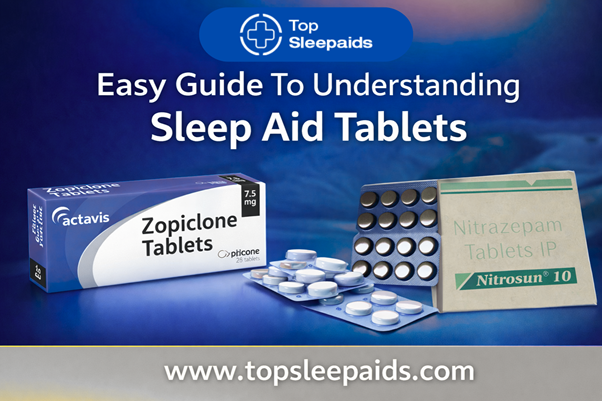
Most human beings find it hard to sleep, their mind is too busy, and they spend many hours wishing they could have a moment of peace. Making sleep unpredictable, daily life is getting heavier, and even basic things require more energy than usual. This is the reason why certain people consider such solutions as sleep aid tablets in order to learn how they may mildly help to establish healthier sleep forms. Still others consider various types of sleeping aids hoping that they will find one that fits their way of living and comfort. However, it is not true that all products operate similarly, and the knowledge of their functioning may make a significant difference in their selection. This guide provides an easy insight into what these options are, their types and how people should consider them before using any sleep-support product.
How Sleep Aid Tablets Work
Sleep aid pills are mostly intended to slow down the body and lower the levels that prevent sleep. Other ones act by supplementing the natural sleep associated with chemicals in the brain, and others can get your body slowing down to the point of falling asleep. Individuals occasionally investigate sleeping aids as their sleep cycle is disrupted by stress or unusual activities, or illnesses. The products do not induce sleep; rather, it helps the body to be relaxed in a more gentle manner. Nevertheless, one should bear in mind that they are not short-term solutions unless they are guided by the proper directions. The best way of knowing whether a given sleep aid suits your needs or not is by talking to a healthcare professional.
Types of Sleeping Aids
We can first of all consider the various forms of options to be able to make our choice. There are those who study sleep aid tablets just to compare the way each one of them works.
- Herbal supplements – These are supplements such as chamomile, valerian root or lavender, mostly herbal supplements that have a calming effect.
- Melatonin supplements- These are used to aid in your body’s natural sleep hormone which is usually effective in jet lag or abnormal schedules.
- Over-the-counter pills – There are some sleep aid pills which have antihistamines that cause one to feel drowsy, but they are not supposed to be taken in large amounts.
- Prescription drugs – These are more powerful ones that are only taken by individuals requiring particular medical assistance and must never be administered without the supervision of a physician.
- Behavioral and natural aids – These are breathing exercises, white-noise devices or guided relaxation exercises that most individuals employ to achieve better outcomes with the help of sleeping aids.
In their search of various options, one can encounter a great variety of sleep aid tablets, all claiming to provide their users with a peaceful sleep. It is necessary to go beyond the labels and think about what is really safe and appropriate to your body. Looking at the ingredients, and learning the duration of effect and noticing how your body reacts to it can help avoid undesirable problems. Other people combine mild lifestyle modification without prescription sleeping medications to improve the quality of their sleep, including establishing a bedtime schedule or limiting screen time before bed.
Conclusion
Sleep is a significant factor in emotional equilibrium, concentration, and body wellbeing. When a person is interested in knowing more about sleep aid tablets, or wants to know more about the various forms of sleeping aids, informed decisions can only result in a better outcome. Learning about how these products work and the variety of choices one can make can contribute to the fact that the way to a better rest would be safe, considerate, and, indeed, helpful.