
Choosing an Arabic program for early learners is rarely just a question of books or worksheets. Parents and schools usually want a sequence that introduces language carefully, matches children’s development, and gives teachers enough support to turn lessons into regular progress. That is why Sanabel Arabic Curriculum stands out as more than a product page. It presents Arabic learning as a structured pathway for young non-native speakers, beginning in kindergarten and extending across later levels in a way that builds each stage on the previous one.
What the Sanabel series is designed to do
Noorart describes the Arabic Sanabel series as a curriculum for young non-native Arabic speakers built from kindergarten through grade-level progression. The collection page states that the series contains eight books serving levels from KG through grade six and that each level includes six educational units, with every unit made up of two lessons. It also explains that the curriculum follows a sequential structure in which later content depends on earlier learning, while activities allow both horizontal and vertical expansion according to student ability.
That design matters because language learning becomes harder when materials feel disconnected from one level to the next. A child may memorize vocabulary in one term and then lose it if the next stage has no continuity. Sanabel’s published structure suggests the opposite approach. The repeated unit logic, attention to values and daily life, and gradual increase in conceptual depth are all signs of a curriculum trying to create continuity rather than isolated exercises. For teachers, that kind of progression makes it easier to differentiate instruction inside mixed classrooms. For parents, it creates a clearer sense of how a learner moves from first exposure to stronger reading and writing habits.
Why early Arabic learning needs careful sequencing
The broader regional evidence supports that emphasis on early structure. A World Bank report on Arabic teaching and learning in the Middle East and North Africa states that more than half of children in the region experience learning poverty and cannot read and understand an age-appropriate text by age 10. The report adds that many children begin school learning to read and write in Modern Standard Arabic even though it differs from the Arabic they use at home, and it argues for language-rich environments, early exposure, and instruction aligned with the science of reading.
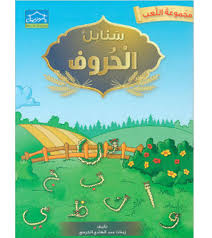
That context helps explain why a beginner-level title such as Arabic Sanabel Level KG1 matters. Noorart’s KG1 description says the book is intended for children aged four to five and focuses on foundational Arabic skills through gradual presentation, age-appropriate development, and support materials that include audio content, lesson plans, word meanings, and teacher guidance. This is not a small detail. Early Arabic learning works better when children hear, repeat, recognize, and write in a coordinated sequence rather than being pushed too quickly into rote recognition alone.
What makes the KG1 stage especially important
The KG1 stage is where a curriculum reveals whether it truly understands early childhood learning. Noorart’s description of the level highlights stories, writing practice, and reinforcement of each target letter through repeated visual and verbal exposure. The broader Sanabel overview also notes that each unit includes listening activities, comprehension tasks, conversation boards, and language exercises, with content tied to children’s realities and values.
Brookings’ early childhood education global hub offers a useful policy lens for this. It describes quality pre-primary education as central to SDG 4.2 and frames early learning investment as a basis for young children’s development. That does not validate any one commercial curriculum by itself, but it does clarify the standard that early-learning programs should meet: they need to be coherent, developmentally aware, and strong enough to support long-term language growth rather than short bursts of recall.
How schools and families should judge an Arabic curriculum
A strong Arabic curriculum for young learners should answer four practical questions:
- Does it build skills in a clear sequence rather than scattered themes?
- Does it connect listening, speaking, reading, and writing instead of isolating one skill?
- Does it give teachers enough planning support to sustain quality instruction?
- Does it respect the developmental pace of children in the early years?
Sanabel appears strongest where those questions matter most. The series overview emphasizes progression, differentiated learning, integrated activities, and teacher resources. The KG1 materials add concrete support tools instead of leaving instruction to improvisation.
Why structured Arabic learning matters beyond the first year
The larger value of a curriculum like Sanabel is not only what it teaches in kindergarten. It is the continuity it can create across later years of Arabic learning. When early learners gain familiarity with sound, vocabulary, comprehension, and writing through a structured sequence, later progress becomes more realistic. In a region where foundational literacy remains a serious concern, that kind of design is more than a classroom convenience. It is part of what makes strong Arabic learning possible from the start.